Beauty and Care Tips for the Garden
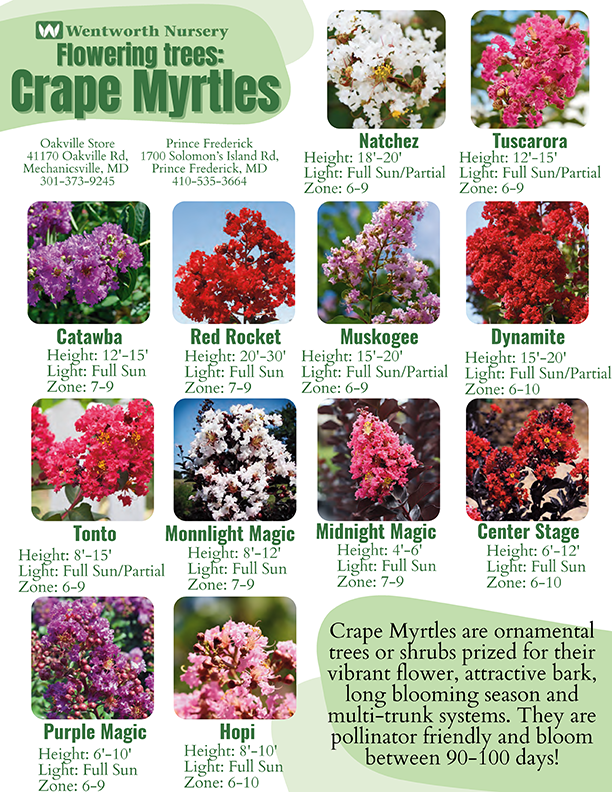
Crape myrtles (Lagerstroemia) are beloved landscape plants, prized for their long-lasting summer blooms, brilliant fall foliage, and attractive bark. Often called the “lilac of the South,” they thrive in warm climates but are versatile enough to be grown in many regions. With varieties ranging from small shrubs to towering trees, crape myrtles can fit into almost any garden design.
Blooming Season & Colors
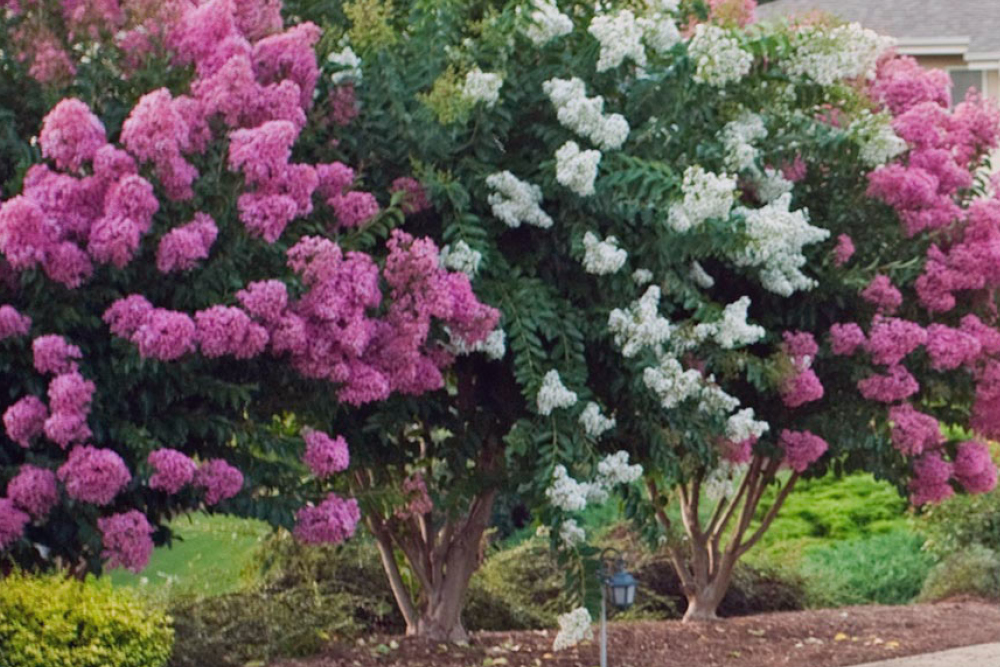
One of the biggest draws of crape myrtles is their extended bloom time. From midsummer into early fall, they put on a colorful display in shades of white, pink, purple, and red. Unlike many plants that fade in the peak of summer, crape myrtles thrive in the heat, offering reliable color when it’s needed most.
Year-Round Interest
Crape myrtles shine in all seasons. In autumn, their leaves turn brilliant shades of orange, red, and yellow. During winter, the smooth, peeling bark adds texture and character to the garden, making them attractive even after the flowers are gone.
Planting & Growing Tips
- Location: Crape myrtles love full sun—at least 6 hours a day is ideal for strong growth and abundant blooms.
- Soil: They prefer well-drained soil but adapt to many types once established.
- Water: Young plants need regular watering, but mature crape myrtles are drought-tolerant.
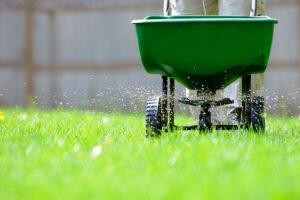
- Fertilizer: A light application of balanced fertilizer in spring promotes healthy growth and flowering.
- Pruning: Avoid heavy cutting, often referred to as “crape murder.” Instead, prune lightly in late winter or early spring to remove crossing branches and shape the plant naturally.
Why Gardeners Love Them
Crape myrtles are relatively low-maintenance, resistant to drought once established, and attractive to pollinators such as bees and butterflies. Their versatility means they can be used as focal points, hedges, or street trees, adding beauty and structure to any landscape.
With the right care, crape myrtles reward gardeners year after year with vibrant blooms, striking bark, and seasonal color—truly making them a four-season treasure in the garden.